Camp Kitchen Storage: Keeping Cookware Organized
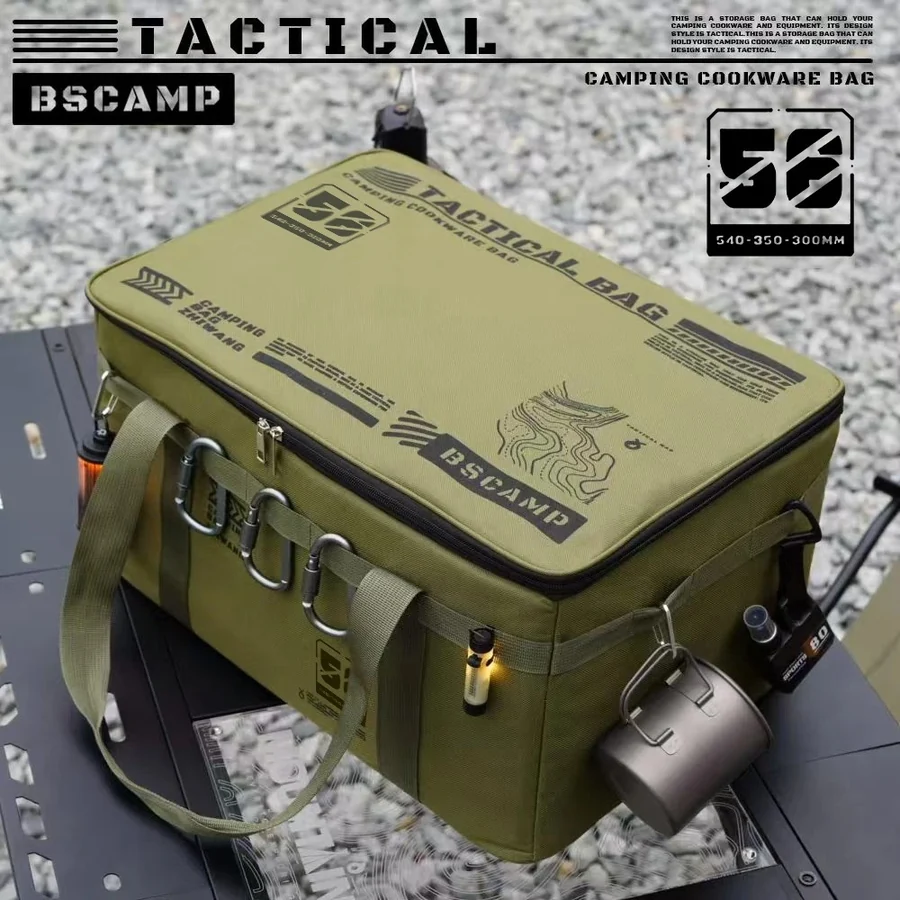
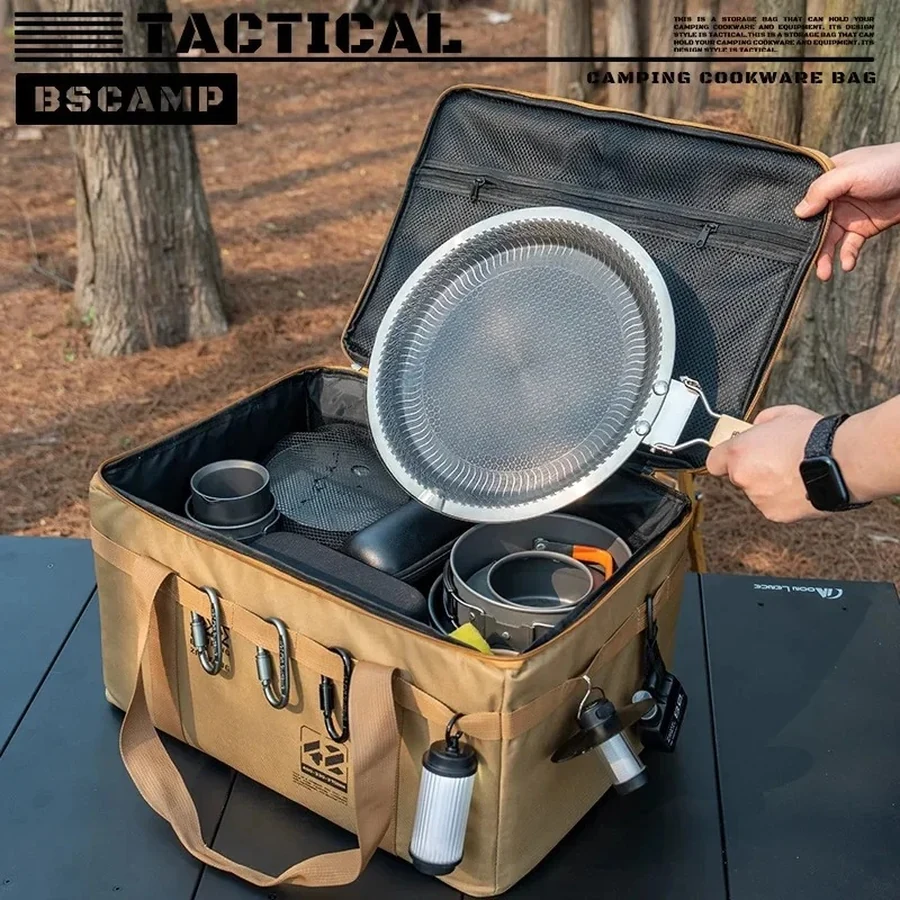
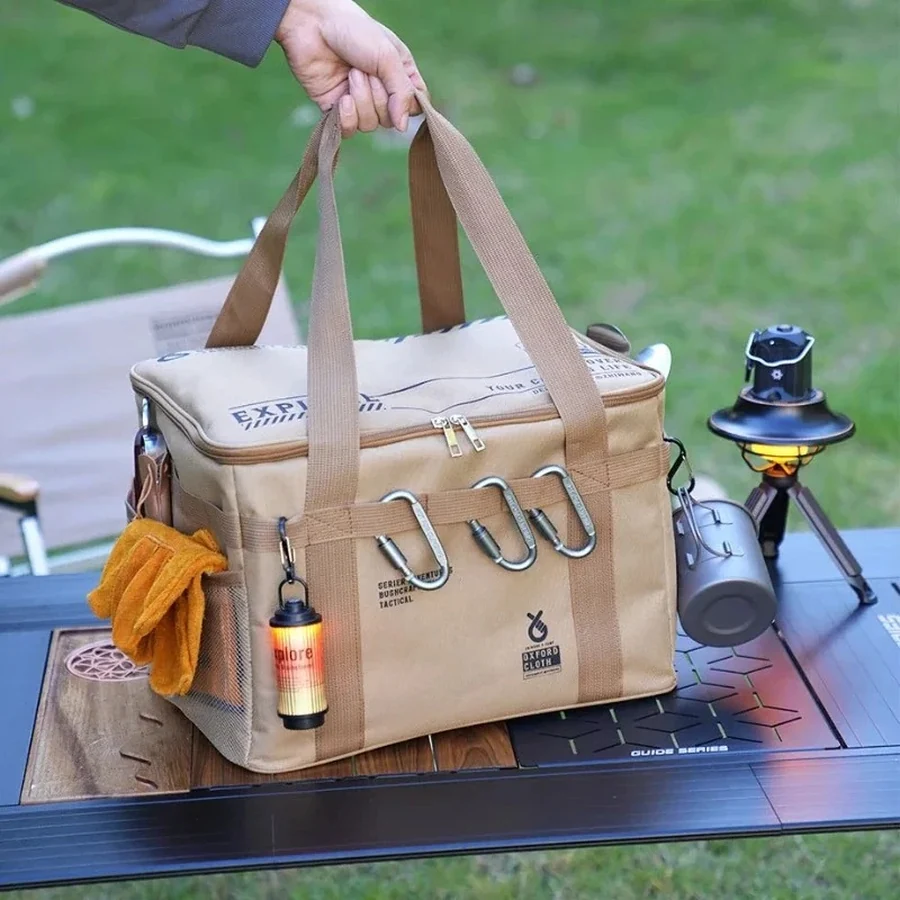
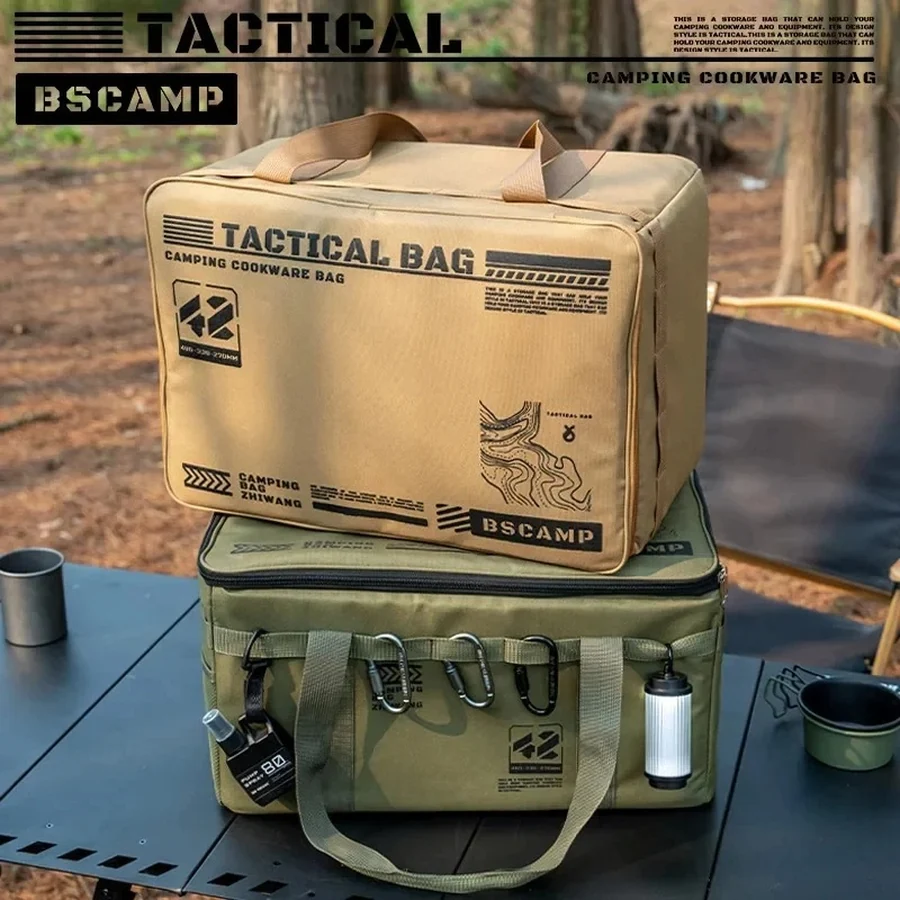
Loose cookware is the part of a car-camping kit nobody plans for. Pots go in one box, the stove in another, plates get wrapped in a towel “so they don’t chip,” and by the second trip half of it is scattered across three different bags. A dedicated storage bag isn’t about looking organized — it’s about not driving home with a cracked plate and grease on your sleeping bag.
What actually goes wrong with loose cookware
Three things happen to cookware that gets tossed into a general gear box or the boot of the car:
- It rattles and chips. Ceramic and enamel plates in particular don’t survive loose contact with a cast-iron pan over a few hours of driving on an unpaved road.
- Grease and soot transfer. A pan that was over a fire an hour ago is still sooty, and it will mark anything it touches for the rest of the drive.
- Small pieces go missing. A lid, a gas canister, a spork — anything not held in a fixed spot works its way to the bottom of a general gear pile and doesn’t turn up again until you’re unpacking at home.
None of this is really about the cookware itself — it’s about not having a container built to hold cookware specifically, the way a tackle box is built for hooks and a tool bag is built for tools.
What a dedicated bag needs to actually solve this
A few things separate a bag that actually solves this from one that’s just a bigger box:
- A waterproof or wipeable base. Cookware goes back in the bag before it’s fully clean more often than anyone admits. A base that can be hosed off matters more than the fabric on the sides.
- Fixed carry handles rated for the weight. A full set of cookware, a stove, and fuel gets heavy fast — handles that flex or stitching that isn’t rated for it fails at the worst moment, usually loaded, mid-air, between the car and the table.
- Enough internal volume for the set you actually own, not the set in the marketing photo. Measure your own cookware before assuming a given capacity fits it.
- A closure that survives being thrown in a trunk, not just carried carefully to a photo.
The specifics, for the one this article is paired with
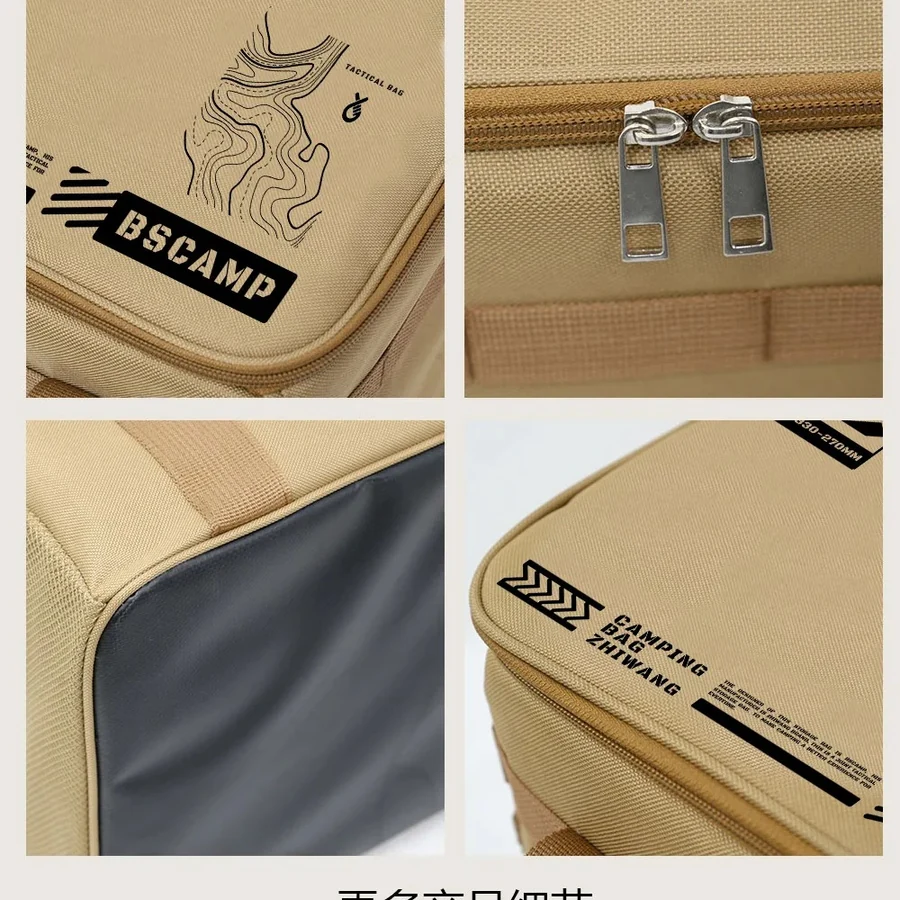
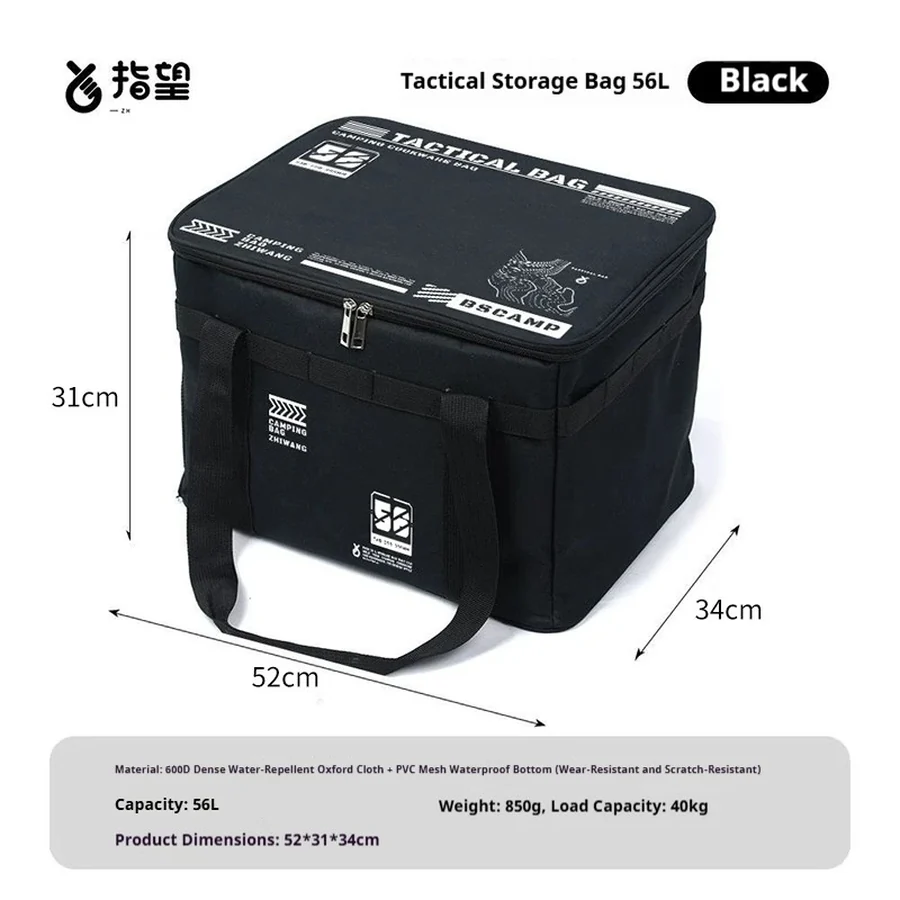
This article is paired with a 56-litre version of exactly this kind of bag. Its own listed specifications: 600D water-repellent Oxford cloth body with a PVC mesh waterproof bottom, a stated load capacity of 40kg, and dimensions of 52 × 31 × 34cm at roughly 850g empty. Those numbers are the manufacturer’s own stated specs for this specific bag, not a claim this site has tested — check them against your own cookware and vehicle space before buying, the way you would for any gear purchase.
Packing it so it stays organized on the second trip, not just the first
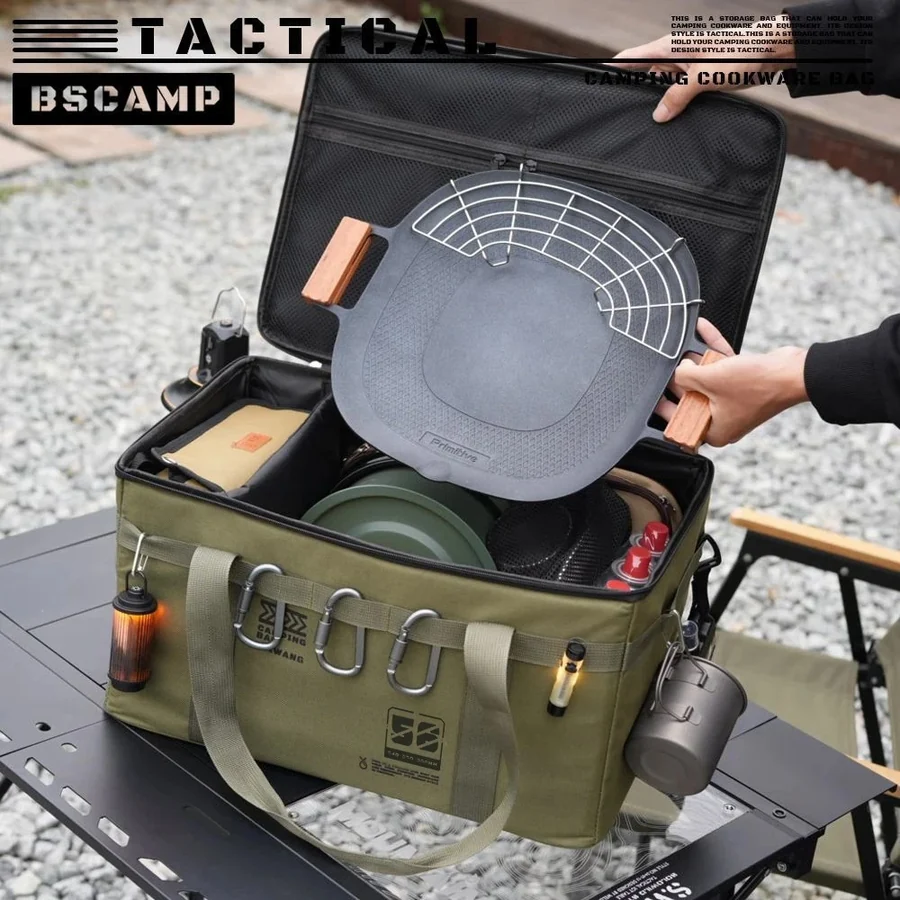
- Heavy, flat items go on the bottom — griddles, cast iron, the base of a cookware set.
- Anything fragile gets a fixed spot, not just cushioning. A plate that can shift is a plate that eventually breaks; a plate wedged against something solid usually isn’t.
- Small loose items go in one pouch, always the same one. A lighter, a multi-tool, a gas canister — pick one pocket for all of them so you stop searching the whole bag for a spark igniter at dinner time.
- Pack the first thing you’ll need last night’s leftovers before this trip’s food — whatever you’ll reach for first at camp goes in last, on top.
Where this fits the rest of your setup
This solves the cooking side specifically — for the rest of what car camping needs, from a stove and cooler down to sleeping gear, the car camping packing list covers the full comfort-item breakdown, and the campfire cooking guide covers what to actually do with the cookware once it’s out of the bag.
Quick answers
Do I need a dedicated bag for camping cookware, or is a general storage box fine? A general box works until cookware rattles against something fragile or a still-sooty pan marks the rest of your gear — a dedicated bag with a wipeable base and fixed handles is built for exactly that problem, a general box isn’t.
What should I look for in a camp kitchen storage bag? A waterproof or wipeable base, handles and stitching rated for a full cookware set’s weight, and enough internal volume for what you actually own — measured against your own gear, not the capacity number alone.
How do I stop losing small items like lighters and gas canisters at camp? Pick one pocket in the bag for all small loose items, every trip, so you’re checking one spot instead of searching the whole bag.
Should heavy cookware go on top or the bottom of the bag? Bottom. Heavy, flat items like griddles and cast iron sit low and stable there; fragile items go higher, wedged against something solid rather than just cushioned.
The full kit pairs this with the Survival Cards deck — so you’re not only packed right, you know what to do when the day goes sideways.
Learn it properly, before you need it
Survival Cards turns this and 88 other skills into a deck you can play round a fire — $19, print at home. See what's inside →
Related guides
Car Camping Packing List: What's Worth the Extra Space
A car camping packing list that takes advantage of not carrying everything on your back — comfort items worth bringing, and the ones that just become clutter.
campfire cooking recipes for beginnersCampfire Cooking Recipes for Beginners
Simple campfire recipes that work with one pan and minimal ingredients — plus the single technique change that stops beginners burning everything.
survival kit checklist for campingSurvival Kit Checklist for Camping (What Earns Its Weight)
A survival kit checklist organised by what each item actually prevents — and an honest note about which popular items are mostly reassurance.
packing list for a weekend camping tripPacking List for a Weekend Camping Trip (2 Nights, Done Right)
A weekend camping packing list for a 2-night trip — clothing for two full days, sleep and cooking gear, and how to avoid packing for a week-long trip by mistake.